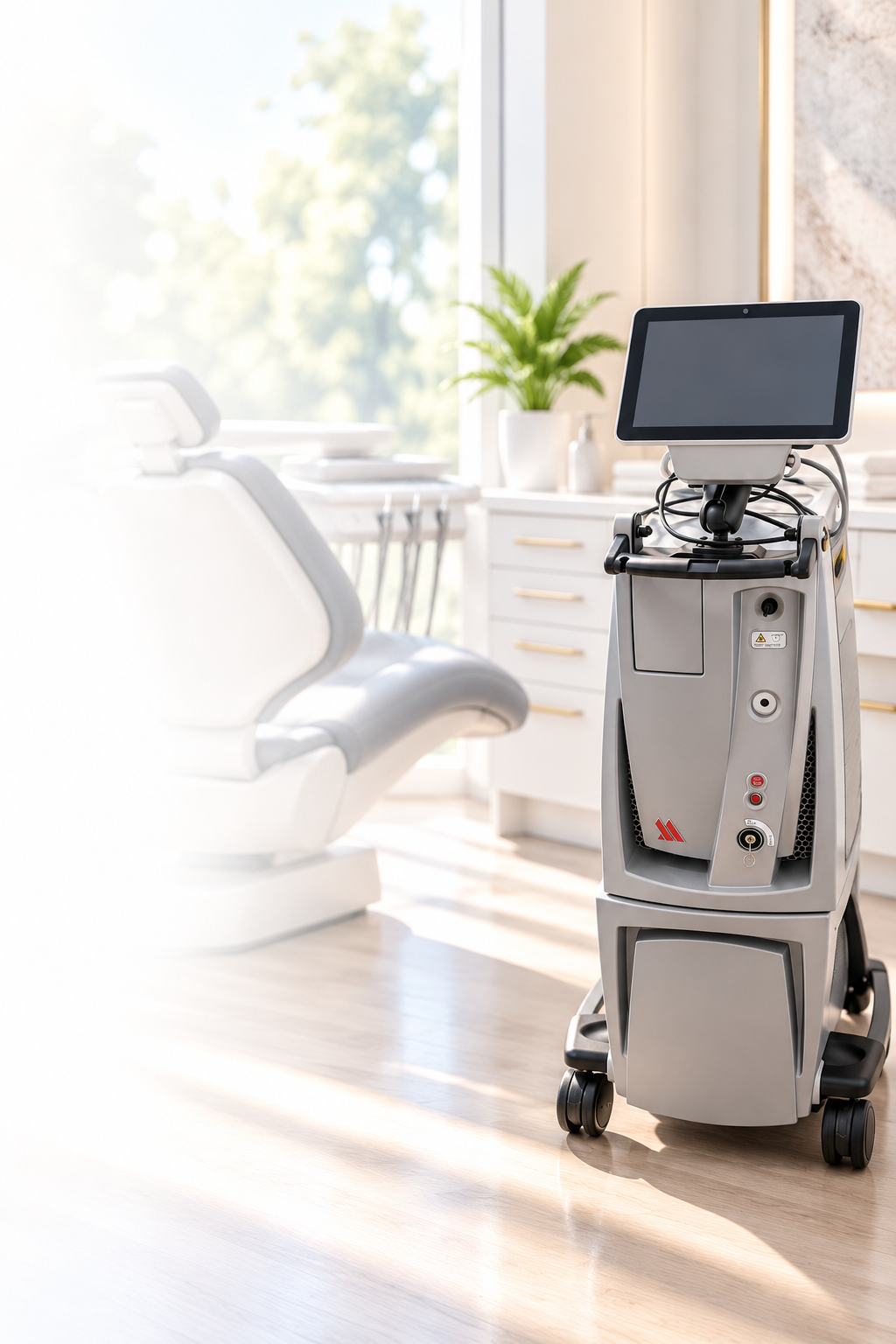
LANAP® & LAPIP™ Laser Treatment
Advanced Laser Care for Your Gums, Natural Teeth, and Dental Implants
Healthy gums and supporting bone are essential to maintaining strong natural teeth and stable dental implants.
When periodontal disease or peri-implantitis develops, these supporting structures can become inflamed and damaged, potentially threatening the long-term health of your smile.
At Fly Creek Dental & Aesthetics, Dr. Ninel Wendover offers advanced laser treatment options designed to help patients manage these conditions.
Through her commitment to continuing education in periodontal disease and treatment, Dr. Wendover has expanded the periodontal services available at our practice to include LANAP® Laser Periodontal Treatment and LAPIP™ Laser Implant Treatment.
These specialized treatment protocols provide minimally invasive options for appropriately selected patients.
What Is LANAP?
Laser-Assisted New Attachment Procedure
LANAP® is a specialized laser-based treatment protocol designed to manage periodontitis, an advanced form of gum disease that damages the tissues and bone supporting natural teeth.
As periodontal disease progresses, bacteria and inflammation can contribute to deepening periodontal pockets, gum recession, and bone loss.
LANAP uses a specialized dental laser as part of a structured treatment protocol to address affected periodontal tissues and bacterial contamination.
The procedure also involves removing deposits from the tooth roots and treating the periodontal pockets to support healing.
Unlike traditional periodontal flap surgery, LANAP does not generally require conventional scalpel incisions or sutures.
How Does LANAP Work?
LANAP treatment involves several carefully planned steps.
Step 1: Periodontal Evaluation
Dr. Wendover evaluates your gum health, periodontal pocket depths, supporting bone, and overall dental condition to determine whether LANAP may be appropriate.
Step 2: Laser Treatment
A specialized laser is used within the periodontal pockets to treat affected tissue and reduce bacterial contamination.
Step 3: Root Surface Cleaning
Plaque, tartar, and other deposits are removed from the root surfaces using appropriate dental instruments.
Step 4: Additional Laser Treatment
The laser is used again as part of the treatment protocol to support clot formation and tissue healing.
Step 5: Healing and Follow-Up
Your gums are monitored as they heal, and an individualized periodontal maintenance plan is established to help manage the disease over time.
Potential Benefits of LANAP
For appropriate patients, LANAP may offer:
A minimally invasive approach to periodontal treatment.
Reduced need for conventional incisions and sutures.
Preservation of healthy surrounding gum tissue.
Less postoperative bleeding or swelling in some cases.
Improved periodontal pocket depths.
Support for healing and periodontal stability.
A treatment option focused on preserving natural teeth whenever possible.
Some clinical studies have reported improvements in periodontal attachment and bone measurements following LANAP. However, the extent of healing varies, and regeneration cannot be guaranteed.
Who May Be a Candidate for LANAP?
LANAP may be considered for patients with moderate to advanced periodontitis, particularly when deeper periodontal pockets and supporting bone loss require treatment beyond routine preventive care.
Dr. Wendover will evaluate the severity of your condition and discuss whether LANAP, Scaling and Root Planing, or another periodontal treatment approach is most appropriate.
Not every patient with gum disease requires laser treatment.
What Is LAPIP?
Laser-Assisted Peri-Implantitis Procedure
Dental implants can provide an excellent long-term solution for missing teeth, but they still depend on healthy surrounding tissues and supporting bone.
When inflammation and bone loss develop around an implant, the condition is known as peri-implantitis.
Peri-implantitis can progress over time and may threaten the stability of the implant if left untreated.
LAPIP™ is a specialized laser-based treatment protocol designed to help manage peri-implantitis.
The procedure uses laser technology as part of a comprehensive approach to treating affected tissues, reducing bacterial contamination, and supporting healing around dental implants.
How Does LAPIP Work?
LAPIP treatment is tailored to the condition of the implant and surrounding tissues.
The process may include:
Comprehensive Implant Evaluation
Dr. Wendover evaluates the tissues surrounding the implant, reviews appropriate imaging, and assesses signs of inflammation or supporting bone loss.
Laser Treatment
A specialized laser is used to treat affected tissues and help reduce bacterial contamination around the implant.
Implant Surface Management
The implant and surrounding area are treated using techniques appropriate for the implant and the extent of the condition.
Healing and Monitoring
Follow-up evaluations help assess the response to treatment and determine whether additional care is necessary.
Potential Benefits of LAPIP
For appropriate candidates, LAPIP may offer:
A minimally invasive treatment approach.
Reduction of inflammation and bacterial contamination.
Less disruption to surrounding healthy tissues.
Support for healing around affected implants.
An option for managing peri-implantitis without conventional surgery in selected cases.
An opportunity to help preserve an existing implant when successful treatment is possible.
It is important to understand that LAPIP cannot guarantee the preservation of a compromised dental implant. Treatment success depends on the extent of bone loss, implant condition, overall health, and other clinical factors.
LANAP vs. LAPIP: What's the Difference?
Although both treatments use advanced laser technology, they address different dental conditions.
LANAP® — For Natural Teeth
LANAP is designed to treat periodontitis affecting the gums and supporting structures around natural teeth.
LAPIP™ — For Dental Implants
LAPIP is designed to help manage peri-implantitis affecting the tissues and supporting bone around dental implants.
Both protocols aim to reduce disease-related inflammation and support healing, but they are not interchangeable.
Dr. Wendover will determine which treatment, if either, is appropriate for your condition.
Why Early Treatment Matters
Periodontal disease and peri-implantitis can progress with little or no discomfort.
Signs that may warrant an evaluation include:
Bleeding or swollen gums.
Persistent bad breath.
Gum recession.
Deep periodontal pockets.
Changes around existing dental implants.
Loose teeth or changes in implant stability.
Discomfort when chewing.
Even if you're not experiencing pain, inflammation or supporting bone loss may still be present.
Early detection and appropriate treatment can help reduce the risk of additional damage.
Dr. Wendover's Commitment to Periodontal Health
Advanced Education. Individualized Treatment. Long-Term Care.
Dr. Wendover has invested significant time in continuing education focused on periodontal disease and modern treatment approaches.
She understands that protecting the supporting structures around natural teeth and dental implants is essential to long-term oral health.
Her approach emphasizes careful diagnosis, patient education, individualized treatment planning, and ongoing maintenance.
By offering advanced laser treatment options alongside traditional periodontal care, our practice strives to provide patients with comprehensive solutions based on their specific needs.
Protect Your Natural Teeth and Dental Implants
Gum disease and peri-implantitis should never be ignored simply because they aren't causing pain.
With early detection, appropriate treatment, and ongoing maintenance, many patients can better manage these conditions and protect their oral health.
At Fly Creek Dental & Aesthetics, we're committed to helping patients understand their options and receive thoughtful, personalized care.
Healthy gums are the foundation of a lasting smile.
Contact our office to schedule a periodontal or dental implant evaluation and learn whether LANAP or LAPIP may be appropriate for you.